Nationhood Lab - Persistent poverty's massive regional differences
My Pell Center project's February 24 newsletter is (belatedly) reproduced here for those interested in our work


Nationhood Lab - Persistent poverty’s massive regional differences
Thank you for your interest in this Nationhood Lab newsletter, where you’ll find the highlights of our recent work on the problems of U.S. nationhood and how to solve them.
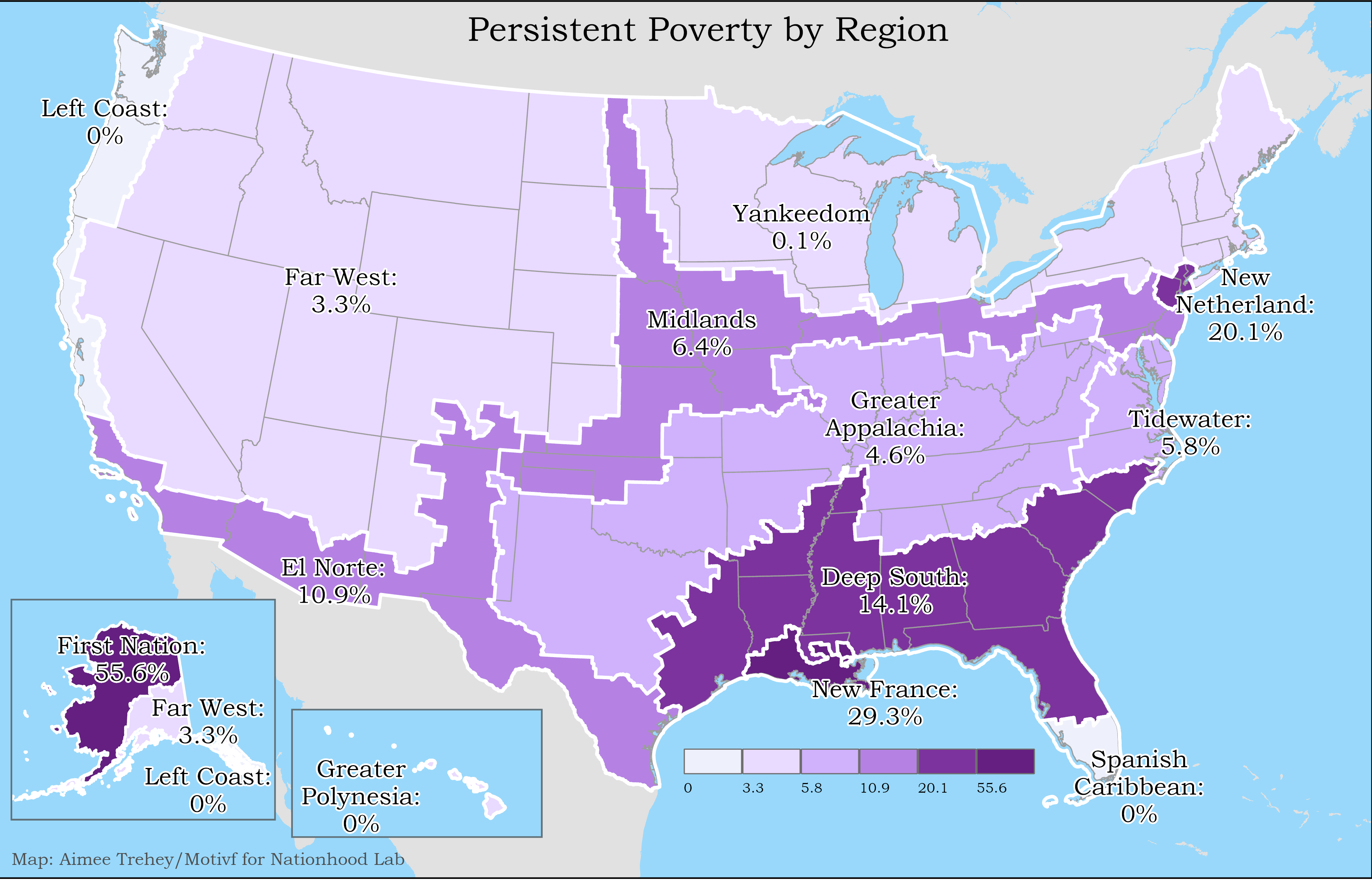
Persistent poverty -- when the poverty rate has exceeded 20 percent for thirty years or more -- greatly varies by region in both intensity and character,a new analysis published Feb. 23 reveals.
In 2023, the federal government identified 314 U.S. counties so afflicted, a little less than one in ten of them. Only three of these counties were in Yankeedom -- a sprawling region of 55 million that includes major metros like Minneapolis,. Milwaukee, Detroit, Cleveland, Buffalo and (shared with the Midlands) Chicago -- and none were in the Left Coast. But in the Deep South, El Norte, and Greater Appalachia such counties clumped together by the dozens, stretching across large swaths of several states. In the Midlands, persistent poverty is almost entirely an urban problem, driven by densely populated places like Philadelphia county and Baltimore and Saint Louis cities. In Greater Appalachia, by contrast. it’s overwhelmingly a rural issue. And New Netherland -- the Dutch-settled area in and around New York City -- has one of the highest proportions of residents living in a persistently poor county, because both the Bronx and Brooklyn have that status.
Is Trump’s support faltering in every region save Greater Appalachia?
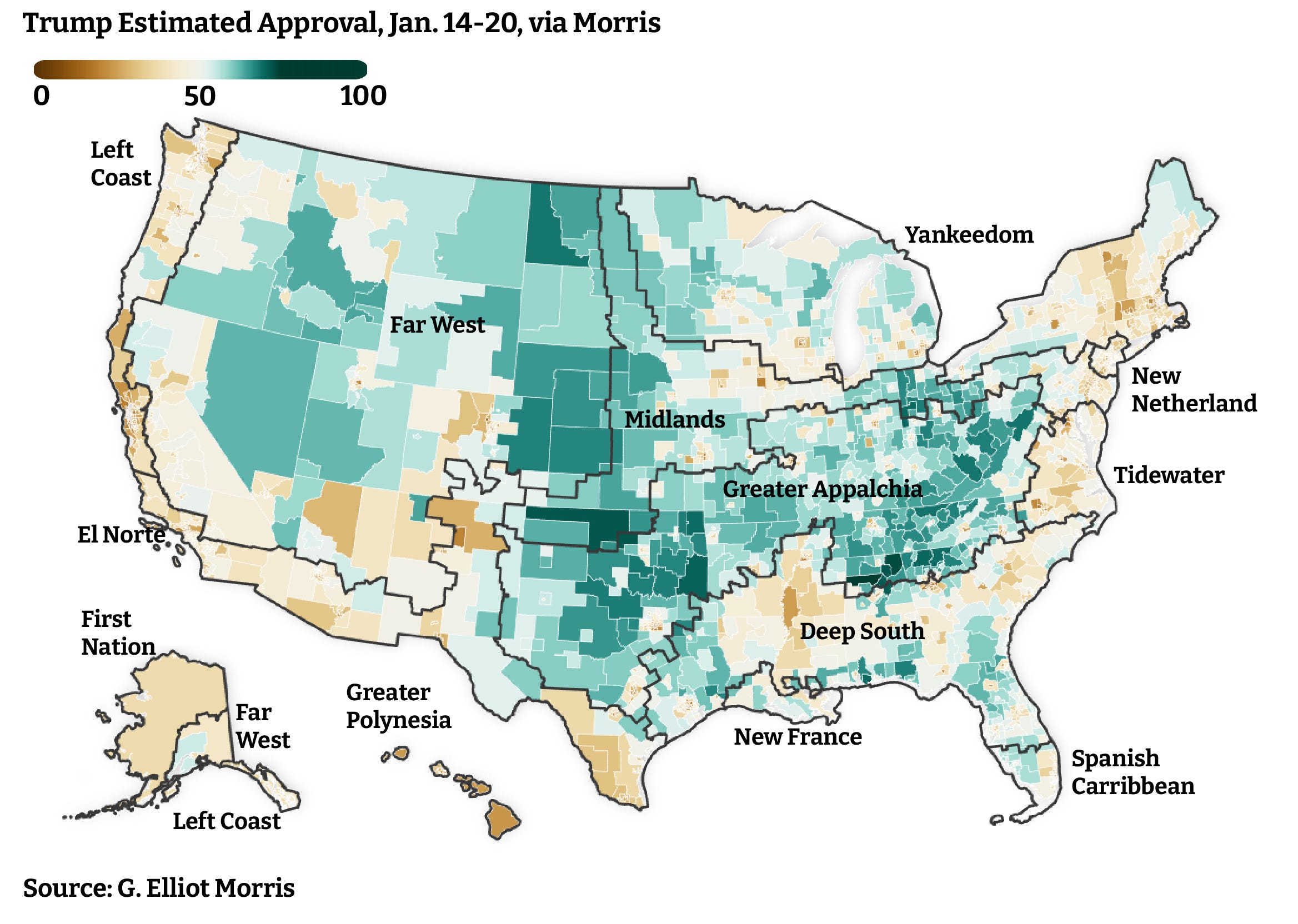
In January, G. Elliott Morris -- the data journalist who headed FiveThirtyEight until ABC shut it down --releaseddetailed local area estimates of Trump’s approval rating based on a national poll he put out in the middle of the month and a 12,000 person survey he fielded in the fall. The regional fissures were striking,leading us to superimpose the American Nations model map on his.
OurFeb. 10 postdiscussed what the inferential estimates showed: a sharp downturn in support for the president across almost every region, including in rural parts of Yankeedom, the Iowa Midlands, the Deep South’s Atlantic lowlands, and the Lower Rio Grande Valley in Texan El Norte. Among the regions, only Greater Appalachia appears to be sticking with the president. As the article notes, if accurate this spells electoral disaster for Trump and his enablers.
In Poland, Woodard shares Nationhood Lab’s work with scholars, students, officials and the media
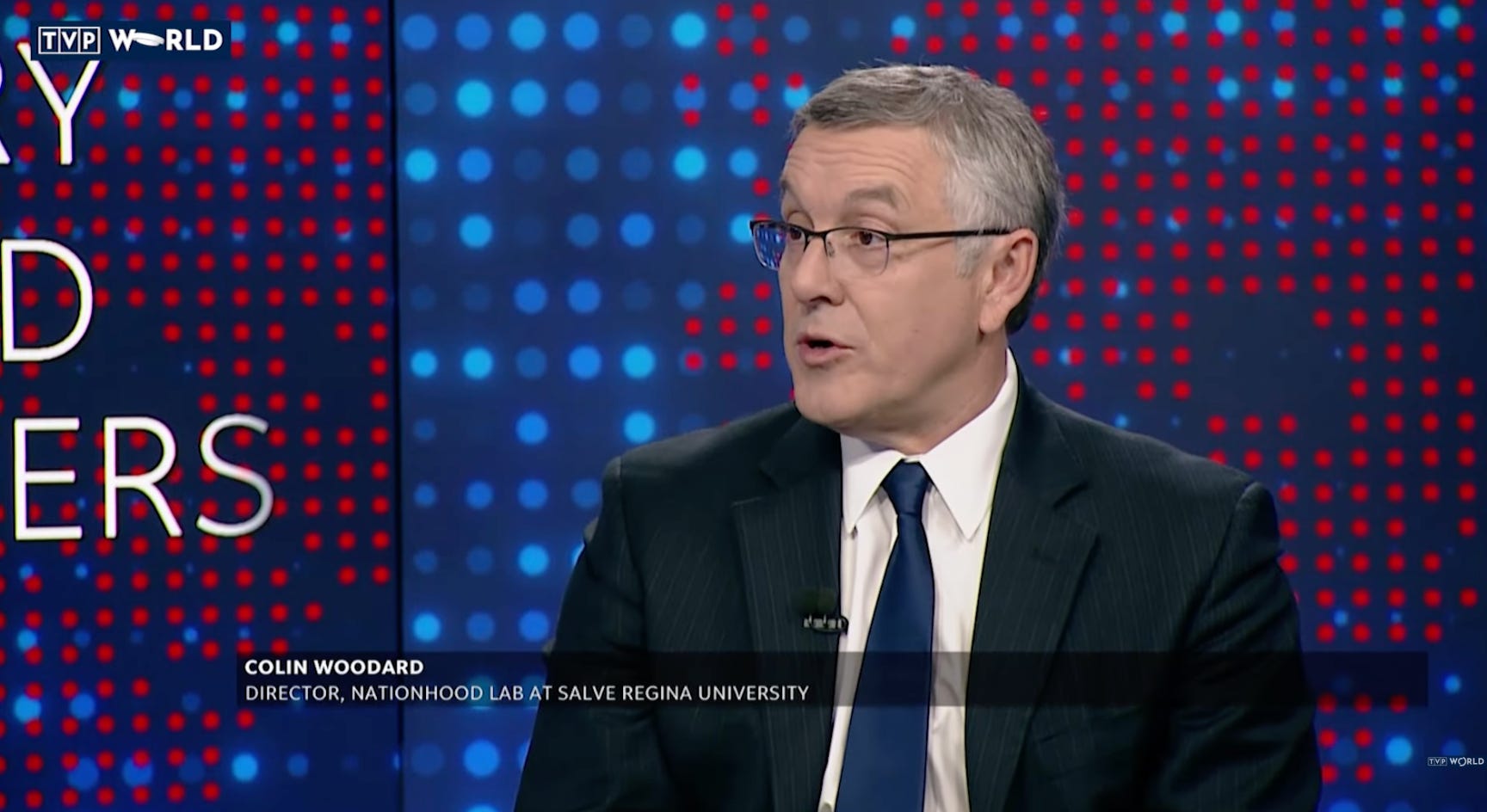
During a week when Europeans deployed military forces to deter a possible attack on their territory by the United States and federal agents in Minneapolis were under fire for what appear to be the summary executions of U.S. citizens, Nationhood Lab director Colin Woodard was in Poland, sharing his work on why the U.S. has always been vulnerable to democratic and territorial collapse and what the implications of its authoritarian turn are for the Trans-Atlantic alliance and European security.
“We’re, in political science terms, a hybrid regime: no longer a properly functioning democracy, not yet a dictatorship,” he told the staff of OSW, the Center for Eastern Studies, one of Poland’s leading international relations think tanks. “What happens next depends largely on the American public, who will have to ‘lead from behind’ to save themselves. I think they will. But it’s going to get worse before it gets better.”
During the mid-January trip, he also presented at the University of Warsaw’s American Studies Center and the Ministry of Foreign Affairs’ “American Fridays” lecture series for scholars and diplomatic officials. He also appeared as an in-studio guest on live broadcasts of all three of Poland’s nationwide television networks to discuss current events and the project’s work: TVP World’sTalking with TVP World, TVN-24’sFakty, and POLSAT News’Dzień na Świecie. More details of the trip can be foundin this update.
Woodard on the time NYC tried to become its own country in Smithsonian; discussing ICE’s collision with Yankee culture with the Minnesota Star Tribune

In the current print issue of Smithsonian Magazine, Woodard has a feature on the time New York City tried to leave the United States to escape the control of the “Puritan” Yankee Upstate, and the many times political leaders there have tried to become a separate state. The secession effort, which occurred in the final weeks before the Civil War, was led by the city’s mayor and backed by congressmen, newspapers, and parts of the business community.
He was also interviewed by Minnesota Star-Tribune staff columnist Jill Burcum about how Yankee cultural norms have collided with ICE’s authoritarian campaign in the state for a Feb. 9 story in that paper, the fifth largest in the country. The article was picked up by at least 28 other newspapers, including the Fort Worth Star-Telegram, Miami Herald, Charlotte Observer, and Kansas City Star.
More from Nationhood Lab
Find the latest from Nationhood Lab -- data journalism, updates, media appearances, and peer-reviewed research -- at the project site.
Was this monthly newsletter shared with you? Please consider subscribing here. Already a subscriber? Consider sharing with your networks.
Interested in supporting the project’s work to revitalize American democracy? Please donate. We are entirely citizen-powered.
San Antonio Star-Telegram? I think y’all might want to double check that. The San Antonio newspaper is the San Antonio Express-News and the Fort Worth paper is the Fort Worth Star-Telegram.
Deep South.
Black belt.
Bible belt.
Slavey province.
Targeted poverty.
To you know who.
Shocked. Not.